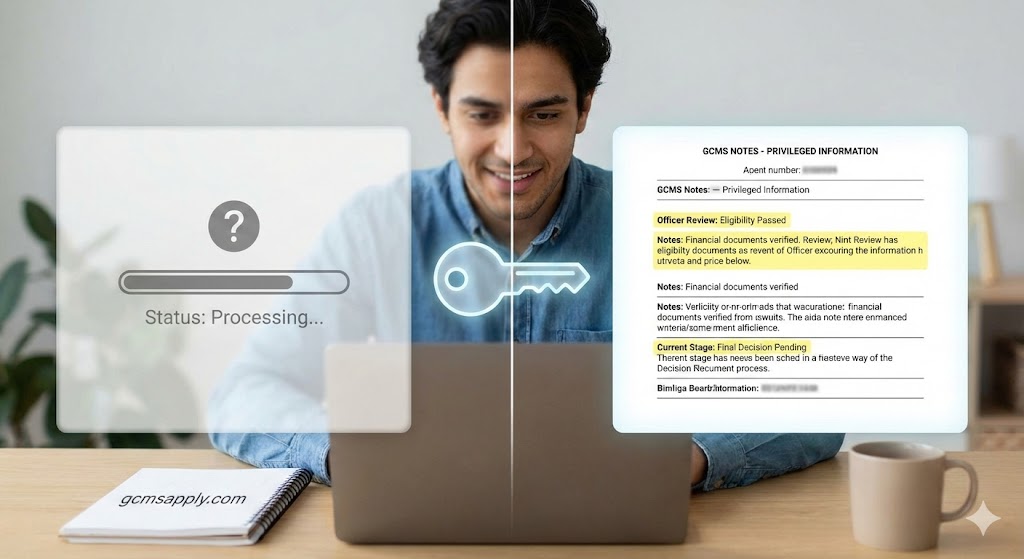

Waiting for a decision from Immigration, Refugees and Citizenship Canada (IRCC) can be one of the most stressful parts of your journey to Canada. Whether you have applied for a Study Permit, Express Entry, a Visitor Visa, or Citizenship, the silence can be deafening.
Even worse is receiving a refusal letter with a generic reason that doesn’t explain why you were rejected.
If you are facing delays or have received a refusal, you need more than just a status update; you need the full picture. This is where GCMS Notes come in.
What Are GCMS Notes?
GCMS stands for the Global Case Management System. It is the comprehensive software system used by IRCC to process and store all data related to immigration and citizenship applications.
When you order your GCMS notes (sometimes referred to as CAIPS notes), you aren’t just getting a generic status update. You are requesting a copy of the actual file the immigration officer is looking at. These notes contain:
- Officer’s Comments: Detailed notes written by the Visa officer reviewing your case.
- The “Real” Status: The specific stage your application is in (e.g., Eligibility, Criminality, Medical, Security).
- Document History: A record of documents received and correspondence sent.
Why the Generic Status Tracker Isn’t Enough
Most applicants rely on the official IRCC online account for updates. However, this portal often displays vague messages like “We are processing your application” or “Background check in progress” for months on end.
If you are refused, the standard letter usually provides a checklist of broad reasons, such as:
“I am not satisfied that you will leave Canada at the end of your stay.”
This doesn’t tell you what triggered that decision. Was it your finances? Your travel history? A missing document?
How GCMS Notes Provide Clarity
By ordering your notes through gcmsapply.com, you gain the following insights:
1. Understand the Real Reason for Refusal
If your application was rejected, the GCMS notes will show the exact paragraph the officer wrote justifying the decision. For example, instead of a generic refusal, the notes might reveal: “Applicant’s bank statements show large lump sum deposits without explanation of source.” knowing this allows you to fix the specific error before re-applying.
2. Diagnose Delays
Is your file stuck in security screening? Has your medical exam result not been attached yet? Sometimes files are delayed simply because they are sitting in a queue waiting for a “Review Required” flag to be cleared. GCMS notes reveal exactly where the bottleneck is.
3. Verify Information Before an Interview
If you are called for an interview, GCMS notes can help you see if there are any discrepancies or concerns the officer has noted. This allows you to prepare specific answers to address their doubts.
4. Check for Administrative Errors
Immigration officers are human. Occasionally, they may overlook a document you submitted. GCMS notes allow you to verify that all your evidence was actually received and reviewed.
When Should You Request GCMS Notes?
You can request notes at any stage, but they are most valuable in these scenarios:
- If your application has exceeded standard processing times.
- Immediately after receiving a refusal letter (before you re-apply).
- If you haven’t heard from IRCC in several months.
- To verify your file is complete before a final decision is made.
How to Apply
Applying for your notes directly through the government can be a complex process involving the Access to Information and Privacy (ATIP) act.
At gcmsapply.com, we simplify the process. We handle the ATIP request on your behalf, ensuring the application is filed correctly so you get your electronic file as fast as possible.
Take Control of Your Application
Don’t rely on guesswork. Your journey to Canada is too important to leave in the dark. Whether you need to understand a rejection or simply want peace of mind regarding a delay, GCMS notes are the only way to see what the officer sees.
[Order your GCMS Notes today] and get the clarity you deserve.

 By
By